
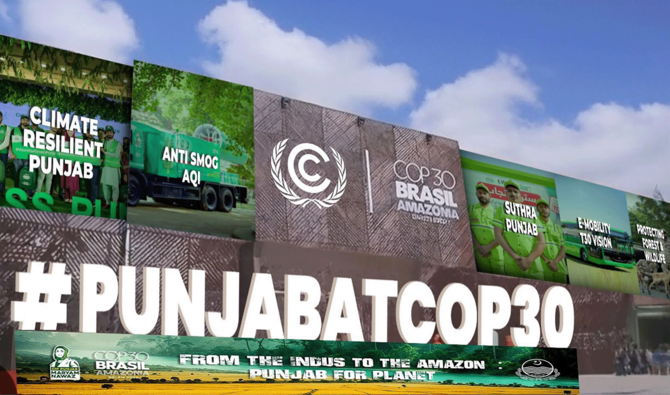
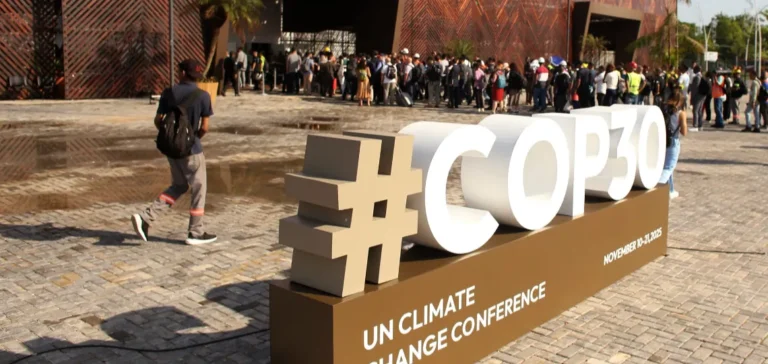
On November 23, 2025, Pakistan made a powerful appeal at COP30 for “urgent, predictable, grant-based finance” to support vulnerable developing nations suffering from repeated climate-related disasters.
Speaking at a special session titled “Operationalising Loss and Damage,” Aisha Humera Moriani—Pakistan’s Climate Change Secretary—highlighted how recent floods drained public resources and pushed the country deeper into debt.
Moriani emphasized that despite being responsible for less than 1% of global emissions, Pakistan has borne significant financial and social costs, making grant-based aid essential to its recovery and resilience efforts.
Other speakers at the event warned that relying on loans for climate adaptation was unsustainable; they described their countries as caught in a “debt emergency” caused by increasingly frequent climate disasters.

Delegates also discussed non-economic impacts, such as cultural loss, trauma, and displacement—all of which, they argued, need funding mechanisms tailored to “loss and damage” rather than traditional development aid.
The event co-hosted by Pakistan and UNICEF stressed the urgency of reforming the global Loss & Damage Fund, calling for faster disbursement and more flexible funding windows.
Observers noted that Pakistan’s message resonated with representatives from other climate-vulnerable nations, many of whom echoed demands for a more equitable financial architecture at COP30.
This call for grant-based financing is part of a larger push at the summit: many countries are arguing that adaptation must be as much of a priority as mitigation, especially for the most at-risk populations.
Pakistan’s representatives also stressed that future climate funds should incorporate simplified procedures to ensure that the most vulnerable groups—not just governments—can access money quickly.
As COP30 wraps up, Pakistan’s demands are likely to be closely watched by other developing nations: if successful, they could reshape how climate finance is distributed and make “loss and damage” a central piece of global climate funding policy.
