
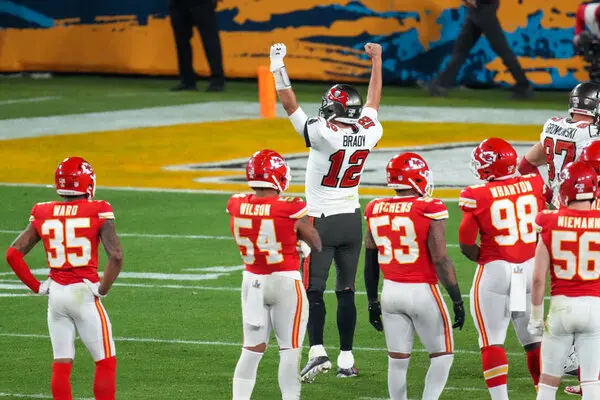
In a bold move to expand its role in global sport, Saudi Arabia announced plans for a high-profile flag football tournament featuring iconic NFL names such as Tom Brady, Rob Gronkowski and Saquon Barkley, with the event due to take place in March 2026. The tournament is more than a showcase game; it is seen by many analysts as a stepping stone toward hosting a regular-season NFL game and positioning the Kingdom as a key player in the global sports arena. This development signals an acceleration in Saudi Arabia’s sports diplomacy—leveraging America’s favourite game to diversify its economy and amplify its international presence.
The tournament will be backed by major sponsors and broadcast partners, giving the region exposure to the U.S. football ecosystem’s commercial scale. For the NFL, expanding into Saudi Arabia offers access to wealthy new markets and an opportunity to test fan engagement outside its traditional strongholds. The script is already being written: the event will include younger players, promotional matches and fan-zone experiences tailored to the Middle East’s growing sports infrastructure. Saudi sports authorities see this as part of a broader strategy that includes Formula 1, golf tournaments, and major boxing cards—unifying under the concept of “sport as soft power” for the Kingdom’s Vision 2030 economic transformation.
While the sporting ambition is clear, the move also reveals deeper currents of contestation. Some critics argue the Saudi initiative represents “sports-washing”—using glittering events to gloss over human rights concerns, labor issues and dissent in the country. Human-rights groups point out that while stadiums and tournaments advance, protections for athletes, migrant workers, and minority communities remain limited. The involvement of high-profile U.S. sports stars adds global spotlight, increasing pressure on the organisers to meet ethical expectations, transparency in labour practices, and infrastructure commitments beyond mere spectacle.
From a local perspective, the economic calculus is ambitious. Hosting an NFL-branded event involves high infrastructure and operational cost: stadium upgrades, fan-experience venues, broadcast capabilities, hospitality amenities and athlete logistics. But with global tourism, investment and media deals increasingly linked, the potential return is significant. Saudi authorities anticipate boosts in tourism, hotel occupancy, retail and global brand recognition tied to such events. For the NFL, aligning with a nation that has both resources and global ambitions offers long-term strategic value—if the pilot event goes smoothly.

There are also implications for the sport itself. American football, long relatively niche internationally, may gain traction in new regions—and if successful in Saudi Arabia, the model could be replicated in Europe, Latin America or Asia. The flag-football format lowers the barrier to entry and may attract local talent, leagues and youth development programmes. The NFL’s global strategy—already including games in London and Mexico City—now looks toward the Middle East as an emerging frontier. For athletes, sponsors and broadcasters, this means shifting gears to accommodate new time zones, custom fan experiences and cross-cultural marketing.
At the same time, the event raises questions of sustainability and legacy. Will the stadiums built or refurbished for this one tournament serve local communities beyond the showpiece? Will youth football infrastructure develop meaningfully? Will local fans become engaged long-term or just spectators of a star-led spectacle? Saudi sports strategists will need to ensure that infrastructure, community programmes and athlete pathways are in place—not just the one-off global moment. Otherwise, the initiative may find itself labelled as a grand marketing exercise in global sport branding.
Looking ahead, March 2026 will be a key test. If the tournament succeeds—commercially, operationally and in fan reception—it could pave the way for an NFL regular-season game in Saudi Arabia, further blurring domestic and international sport footprints. For Saudi Arabia, gaining hosting credentials in one of the world’s most commercially valuable sports will bolster its sport-ambitions globally. For the NFL, it’ll demonstrate whether its brand truly has untapped international scale. More broadly, the move signals how sport, economics and geopolitics increasingly intersect in the 2020s: game day is no longer just about the play—it’s about nation-building, brand building and global influence.
